System for Museums & Archives for Research and Access to Knowledge

| Place | Murshidabad |
|---|---|
| State | West Bengal |
| Virtual Museum | No |
| Year of Establishment | 1980 |
| Museum Type | Historic House / Personalities Museum |
| National Importance Museum | Yes |
| Address | Rabindra Sarani, Kathgola, Murshidabad, West Bengal 742149 |
| Visiting Time | 10:00 AM – 06:00 PM (Daily). Note: Some sources report an earlier opening of 06:30 AM, but 10:00 AM is the standard for the museum galleries. |
| Entry Fee | ₹15 (Indian Nationals) ₹100 (Foreign Nationals). Free for children under 8 years |
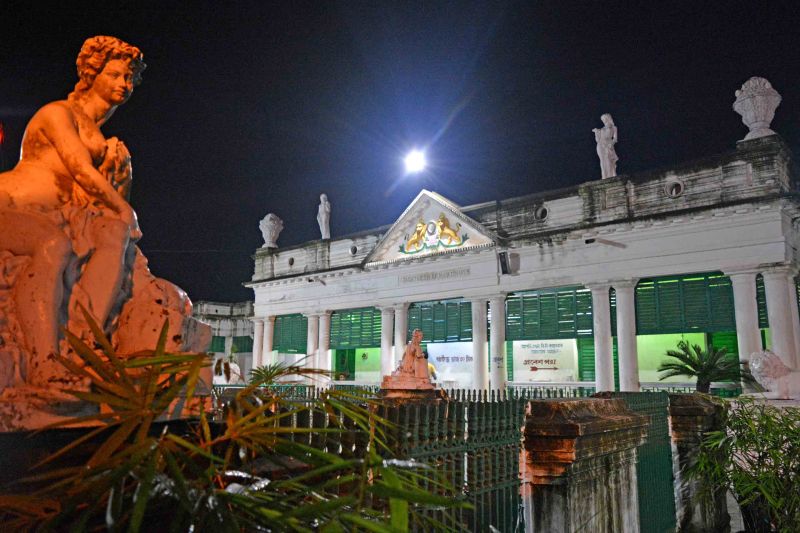
Established in 1980, the House of Jagat Seth Museum is located in the Mahimapur area of Murshidabad, West Bengal. It was once the residence of the world's wealthiest banking family during the 18th century. The title "Jagat Seth" (Banker of the World) was conferred by Mughal Emperor Farrukhsiyar. The mansion served as the financial nerve center of Bengal, playing a pivotal role in the political transition from the Nawabs to British rule following the Battle of Plassey.
The museum showcases the personal belongings and professional artifacts of the Jagat Seth family. The collection includes ancient coins, exquisite muslin cloth, Banarasi sarees embroidered with gold and silver threads, antique furniture, and ivory carvings. It also features a vast array of porcelain, glass, and silver utensils that highlight the family's opulent lifestyle.
Secret Underground Tunnel: A strategic passage used by the family for escape and discreet movements during political turmoil. Underground Chamber: A hidden room where illegal trade plans and political conspiracies, including the plot against Nawab Siraj-ud-Daulah, were reportedly hatched. Jain Footprints: Sacred footprints (Paduka) preserved within the family's private temple on the premises. Vintage Safe: Massive iron chests and locks used to store the family's legendary wealth.
| Archaeological Survey of India | No |
|---|---|
| Notes | The museum is located about 3-4 km from the Hazarduari Palace. Unlike the grand palaces of the Nawabs, this house feels more functional and defensive, reflecting the cautious nature of a merchant dynasty. The guides on-site often provide dramatic narratives regarding the family's rise and their eventual tragic decline under British rule. |
| Artifacts | Gold and silver embroidered garments; Rare coins from the Nawabi and British eras; 18th-century wooden furniture; Glassware imported from Europe; Traditional palanquins; Rare Urdu and Persian manuscripts; Miniature paintings of family members. |
| Highly Descriptive | Yes |
| Contact Details | +91 97756 80888 |