System for Museums & Archives for Research and Access to Knowledge

| Place | Hyderabad |
|---|---|
| State | Telangana |
| Virtual Museum | No |
| Year of Establishment | 1948 |
| Museum Type | Science / Health & Hygiene Museum |
| National Importance Museum | No |
| Address | Public Gardens, Red Hills, Lakdikapul, Hyderabad, Telangana 500004 |
| Visiting Time | 10:00 AM – 05:00 PM (Saturday–Thursday) Closed on Fridays and Public Holidays. Note: Usually closed for lunch between 01:00 PM and 02:00 PM. |
| Entry Fee | Free Entry |
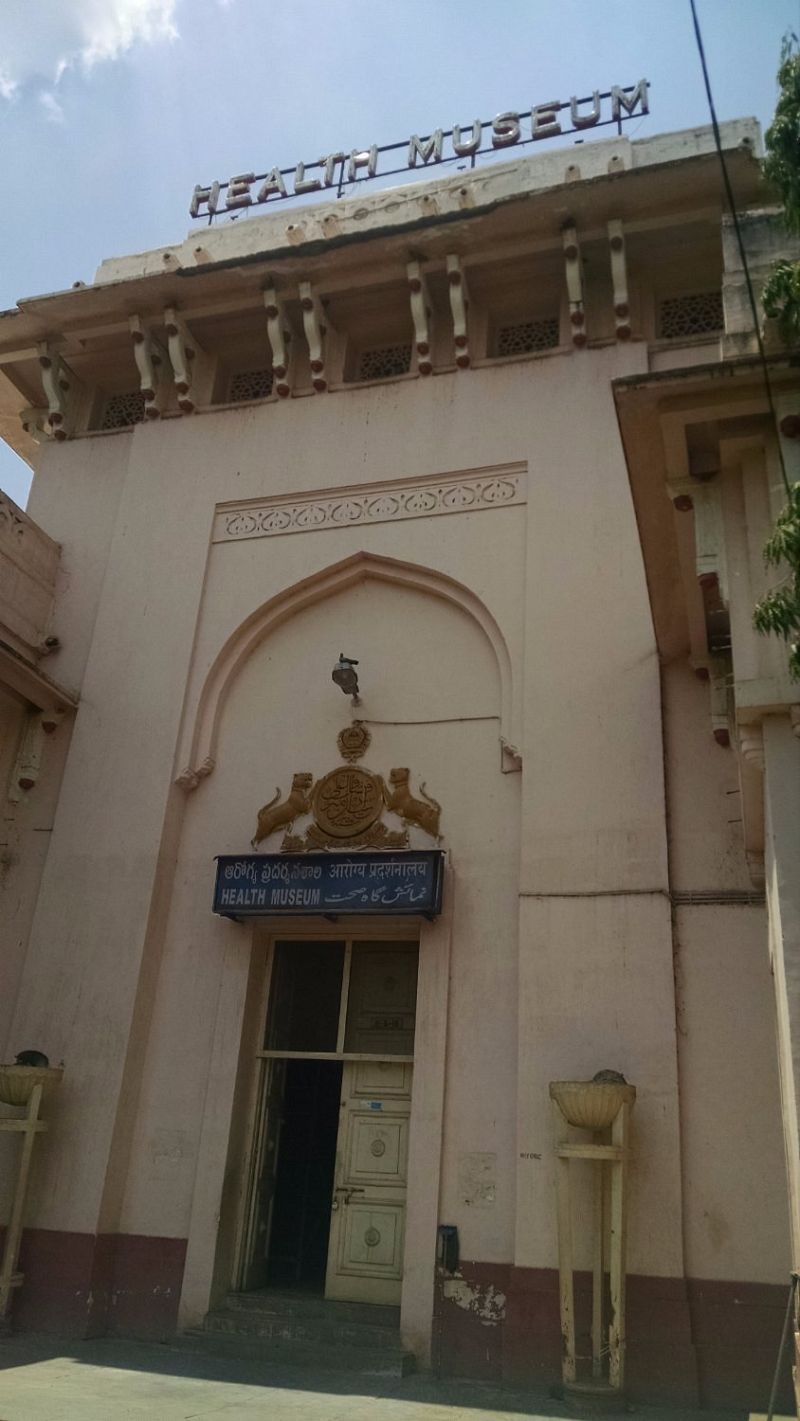
Established in 1948, the Health Museum, Hyderabad is one of the oldest institutions of its kind in India. Initially located in Chikkadpally, it was moved to the Trophy Hall in Public Garden in 1952 before finally settling in its current location within the Ajanta Pavilion at Public Gardens, Nampally. It was founded to educate the public on health, anatomy, and disease prevention, maintaining a distinct mid-20th-century aesthetic.
The museum is divided into two primary sections. The first section focuses on Nutrition and Disease History, documenting ailments like tuberculosis, leprosy, malaria, and cancer. The second section is dedicated to Motherhood and Childbirth, illustrating the biological processes of life. The collection includes life-size anatomical models, healthcare placards, and diagrams of the human immune system.
Mid-Century Classroom Vibe: The museum is noted for its "frozen-in-time" atmosphere, featuring wooden placards, hand-painted diagrams, and 1950s-style educational displays. Anatomical Models: Detailed vintage models of human organs and skeletal structures used for public health awareness during the Nizam's era transition. Film Screenings: The museum maintains a tradition of screening educational health films every Wednesday and Saturday in its dedicated hall.
| Archaeological Survey of India | No |
|---|---|
| Notes | The museum is often described as a "hidden gem" located within the Public Gardens complex, near the Telangana State Archaeology Museum. It remains largely unchanged since its inception, offering a nostalgic look at how medical science was communicated to the masses in the post-independence era. |
| Artifacts | Wooden healthcare placards; Life-size anatomical charts; Historical models of pathogens; Vintage maternal health equipment; Detailed dioramas of rural sanitation; Models illustrating the effects of various vitamin deficiencies. |
| Highly Descriptive | Yes |
| Contact Details | +91 40 2323 7233 |